And what was this surprise?
I’ll tell you, my dear little readers: the surprise was that when Pinocchio woke up, he naturally felt like scratching his head; and as he scratched his head he noticed…
Can you guess what he noticed?
He noticed, to his enormous amazement, that his ears had grown more than a hand’s breadth.
You know that the puppet, ever since he was born, had had tiny little ears: so tiny that you couldn’t even see them with the naked eye! So just imagine how he felt when he found, feeling them with his own hands, that during the night his ears had grown so long that they looked like two reed brooms. He went at once to look for a mirror so that he could see himself; but not finding a mirror, he filled the basin of the washstand with water and, looking at his reflection in it, he saw what he would never have wished to see: that is, he saw his image adorned with a magnificent pair of donkey’s ears. I leave you to imagine the grief, the shame and the despair of poor Pinocchio!
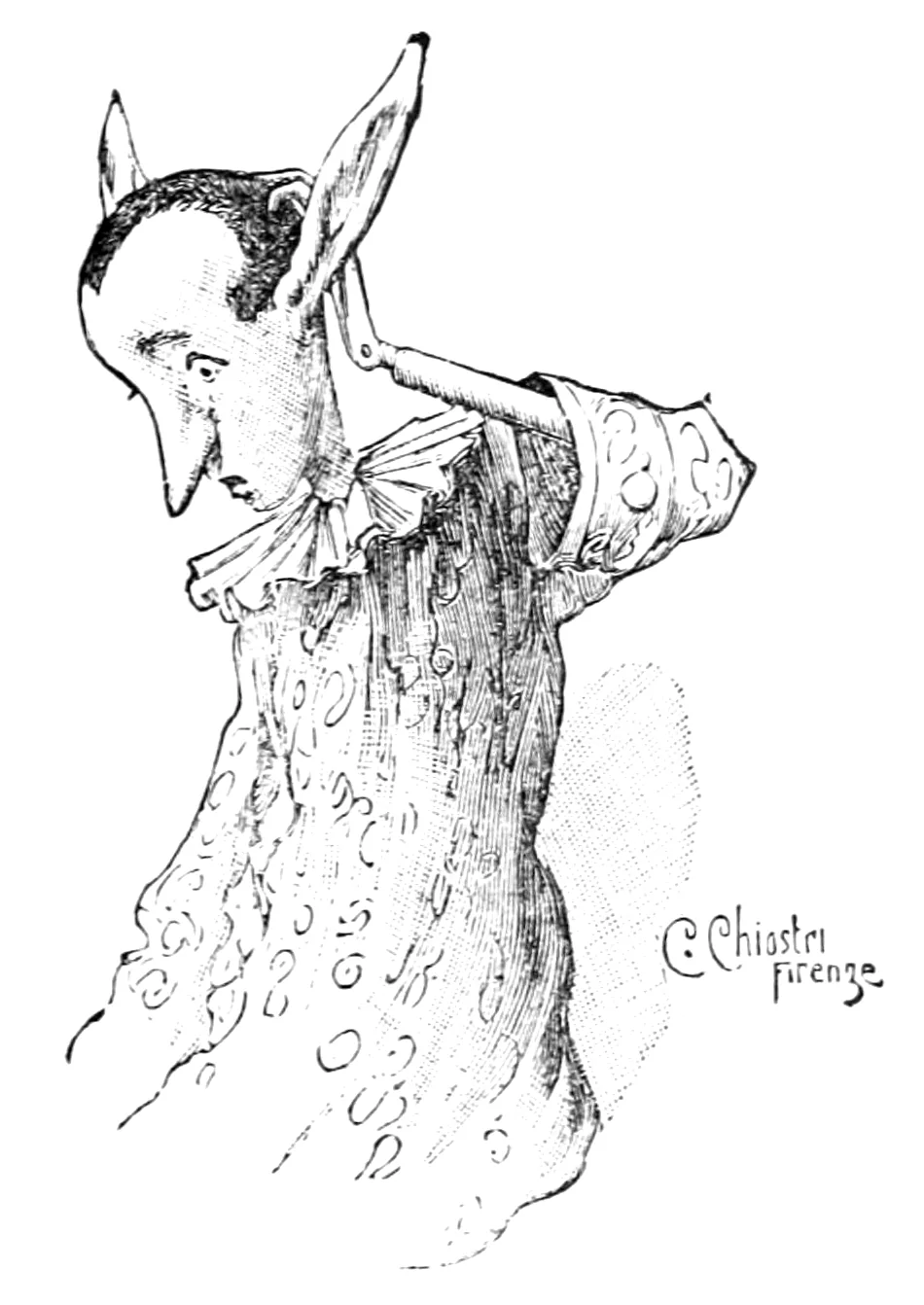
He began to cry, to scream, to bang his head against the wall; but the more he despaired, the more his ears grew, and grew, and grew, and became hairy towards the tips.
At the noise of those piercing cries, a pretty little Marmot who lived on the floor above came into the room, and seeing the puppet in such a frenzy, she asked him anxiously:
“What’s the matter, my dear neighbour?”
“I’m ill, my dear little Marmot, very ill… and ill with a disease that frightens me! Do you know anything about feeling a pulse?”
“A little.”
“Then feel whether by any chance I have a fever.”
The little Marmot raised her right forepaw, and after feeling Pinocchio’s pulse, she said to him with a sigh:
“My friend, I’m sorry to have to give you bad news!…”
“Meaning what?”
“You have a very nasty fever!”
“And what fever would that be?”
“It’s donkey fever.”
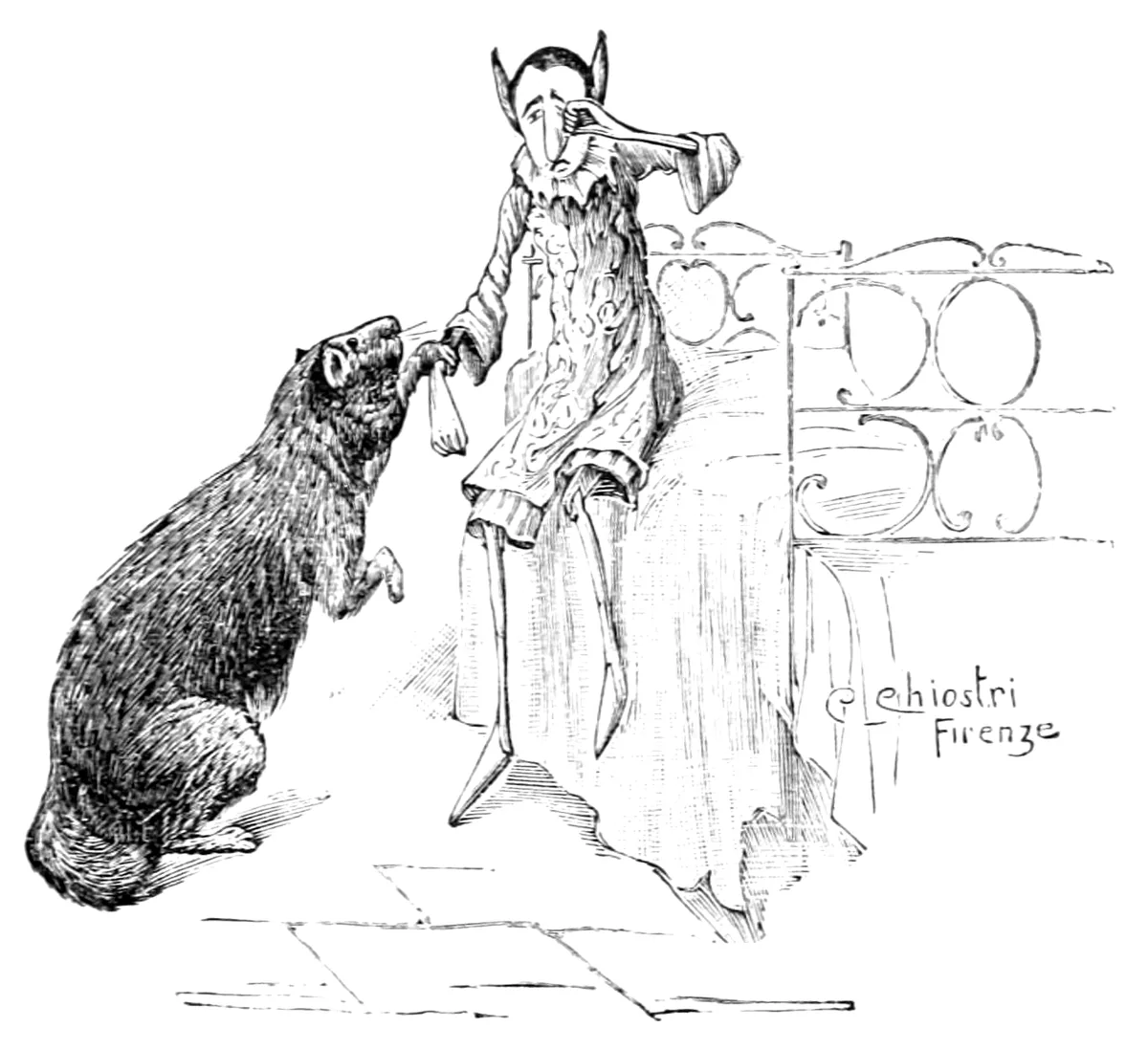
“I don’t understand this fever!” answered the puppet, who, alas, had understood it only too well.
“Then I’ll explain it to you,” added the little Marmot. “You must know, then, that in two or three hours you will no longer be either a puppet or a boy…”
“Then what will I be?”
“In two or three hours you will become a little donkey, a real one, just like the ones that pull carts and carry cabbages and lettuces to market.”
“Oh, poor me! poor me!” cried Pinocchio, seizing both his ears with his hands and pulling and tugging at them furiously, as if they were somebody else’s ears.
“My dear,” replied the little Marmot, to console him, “what can you do about it? It is fate by now; it is written in the decrees of wisdom that all those lazy boys who get tired of books, schools and teachers and spend their days in toys, games and amusements must sooner or later end up turning into so many little donkeys.”
“But is it really so?” asked the puppet, sobbing.
“Alas, it is! And now tears are no use. You should have thought of that before!”
“But it isn’t my fault: believe me, little Marmot, it’s all Lampwick’s fault!…”
“And who is this Lampwick?”
“A schoolmate of mine. I wanted to go home: I wanted to be obedient: I wanted to go on studying and do myself credit… but Lampwick said to me: ‘Why do you want to bore yourself studying? Why do you want to go to school?… Come with me instead to the Land of Toys: there we won’t study any more; there we’ll enjoy ourselves from morning till night and always be merry.’”
“And why did you follow the advice of that false friend, that bad companion?”
“Why?… because, my dear little Marmot, I am a puppet with no sense… and no heart. Oh! if I had had just a tiny bit of heart, I would never have left that good Fairy who loved me like a mother and had done so much for me!… and by now I wouldn’t be a puppet any more… I’d be a proper little boy instead, like so many others! Oh!… but if I meet Lampwick, woe betide him! I’m going to give him a piece of my mind, and then some.”
And he made as if to go out. But when he reached the door he remembered that he had donkey’s ears, and, ashamed to show them in public, what do you think he came up with? He took a big cotton cap, stuck it on his head, and pulled it down right over his ears.
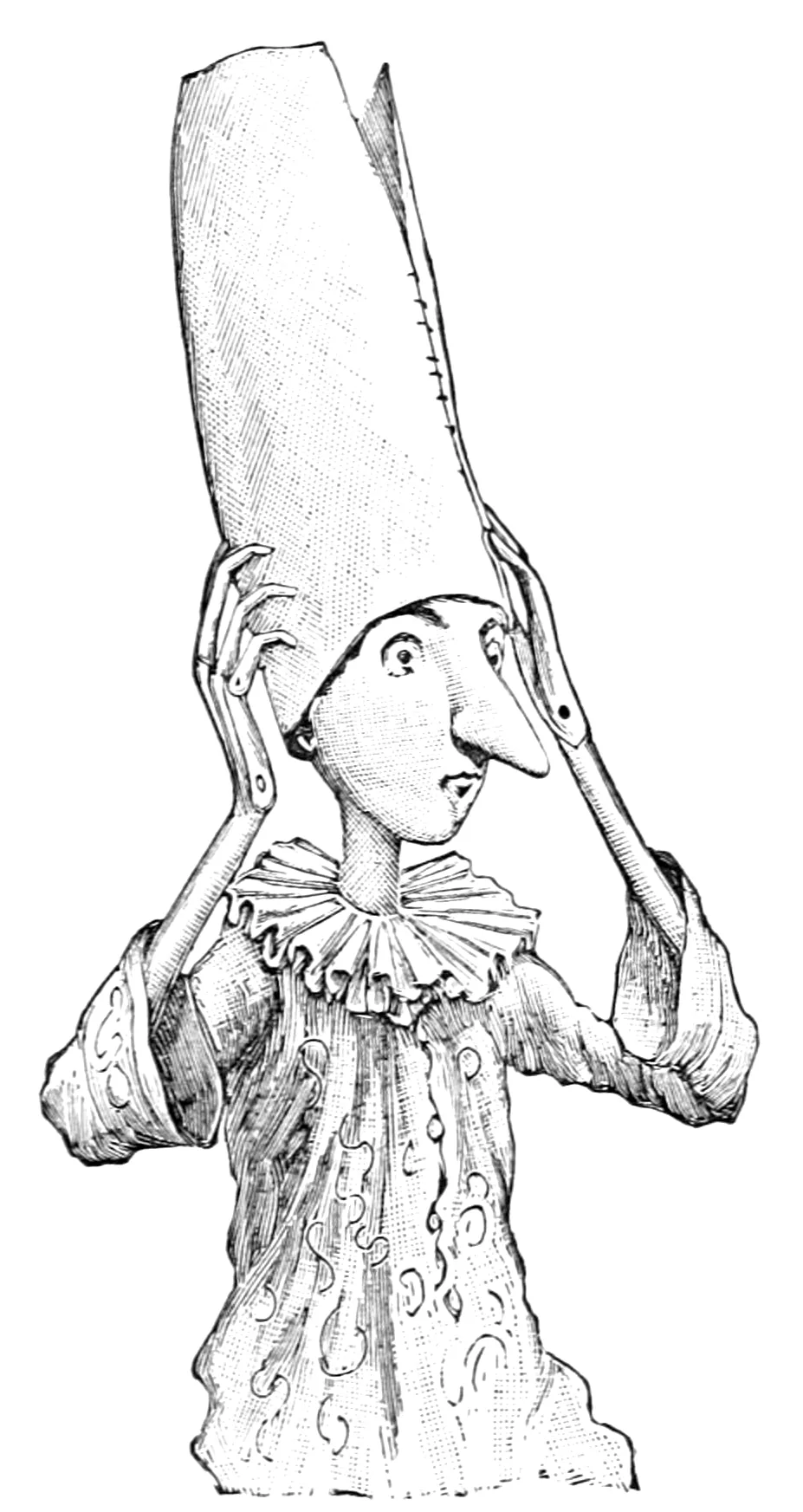
Then he went out and set about looking for Lampwick everywhere. He looked for him in the streets, in the squares, in the little theatres, everywhere: but he did not find him. He asked everyone he met along the way for news of him, but no one had seen him.
Then he went to look for him at his house; and when he reached the door, he knocked.
“Who is it?” asked Lampwick from inside.
“It’s me!” answered the puppet.
“Wait a moment, and I’ll open up.”
Half an hour later the door opened; and imagine how Pinocchio felt when, on entering the room, he saw his friend Lampwick with a big cotton cap on his head, which came down right over his nose.
At the sight of that cap Pinocchio felt almost comforted, and at once he thought to himself:
“Could my friend be ill with the same illness as me? Could he have donkey fever too?…”
And pretending not to have noticed anything, he asked him with a smile:
“How are you, my dear Lampwick?”
“Very well indeed: like a mouse in a Parmesan cheese.”
“Do you really mean that?”
“And why should I tell you a lie?”
“Excuse me, my friend: but then why are you wearing that cotton cap on your head, covering up both your ears?”
“The doctor ordered it, because I’ve hurt my knee. And you, dear Pinocchio, why are you wearing that cotton cap pulled down right over your ears?”
“The doctor ordered it, because I’ve grazed my foot.”
“Oh, poor Pinocchio!”
“Oh, poor Lampwick!…”
These words were followed by a very long silence, during which the two friends did nothing but look at each other mockingly.
At last the puppet, in a honeyed, fluting little voice, said to his companion:
“Satisfy my curiosity, my dear Lampwick: have you ever suffered from any trouble with your ears?”
“Never!… and you?”
“Never! Though since this morning I’ve had an ear that hurts me terribly.”
“I’ve got the same trouble too.”
“You too?… And which ear is it that hurts you?”
“Both of them. And you?”
“Both of them. Could it be the same illness?”
“I’m afraid so.”
“Will you do me a favour, Lampwick?”
“Gladly! With all my heart.”
“Will you show me your ears?”
“Why not? But first I want to see yours, dear Pinocchio.”
“No: you must be the first.”
“No, my dear! You first and me after!”
“Well then,” said the puppet, “let’s make a bargain, like good friends.”
“Let’s hear the bargain.”
“Let’s both take off our caps at the same time: agreed?”
“Agreed.”
“Ready, then!”
And Pinocchio began to count out loud:
“One! Two! Three!”
At the word “Three!” the two boys took their caps off their heads and flung them into the air.
And then there took place a scene that would seem unbelievable if it were not true. That is, when Pinocchio and Lampwick saw that they had both been struck by the same misfortune, instead of feeling mortified and sorry, they began winking at each other’s enormously overgrown ears, and after a thousand silly antics they ended up bursting out laughing.
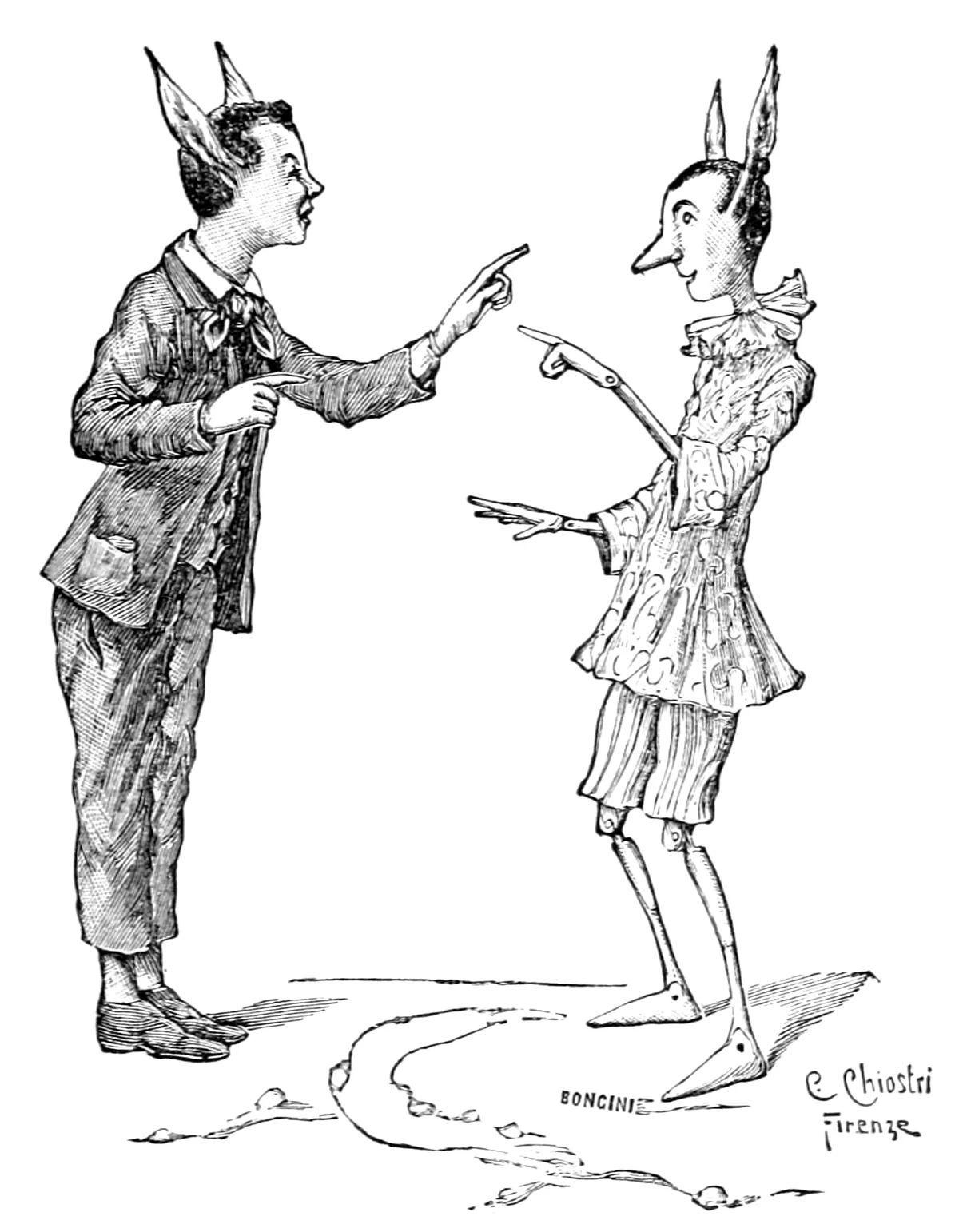
And they laughed, and laughed, and laughed until they had to hold their sides: except that, just when the laughter was at its height, Lampwick suddenly fell silent and, staggering and changing colour, said to his friend:
“Help, help, Pinocchio!”
“What’s the matter?”
“Alas! I can’t stand up on my legs any more.”
“I can’t either,” cried Pinocchio, weeping and tottering.
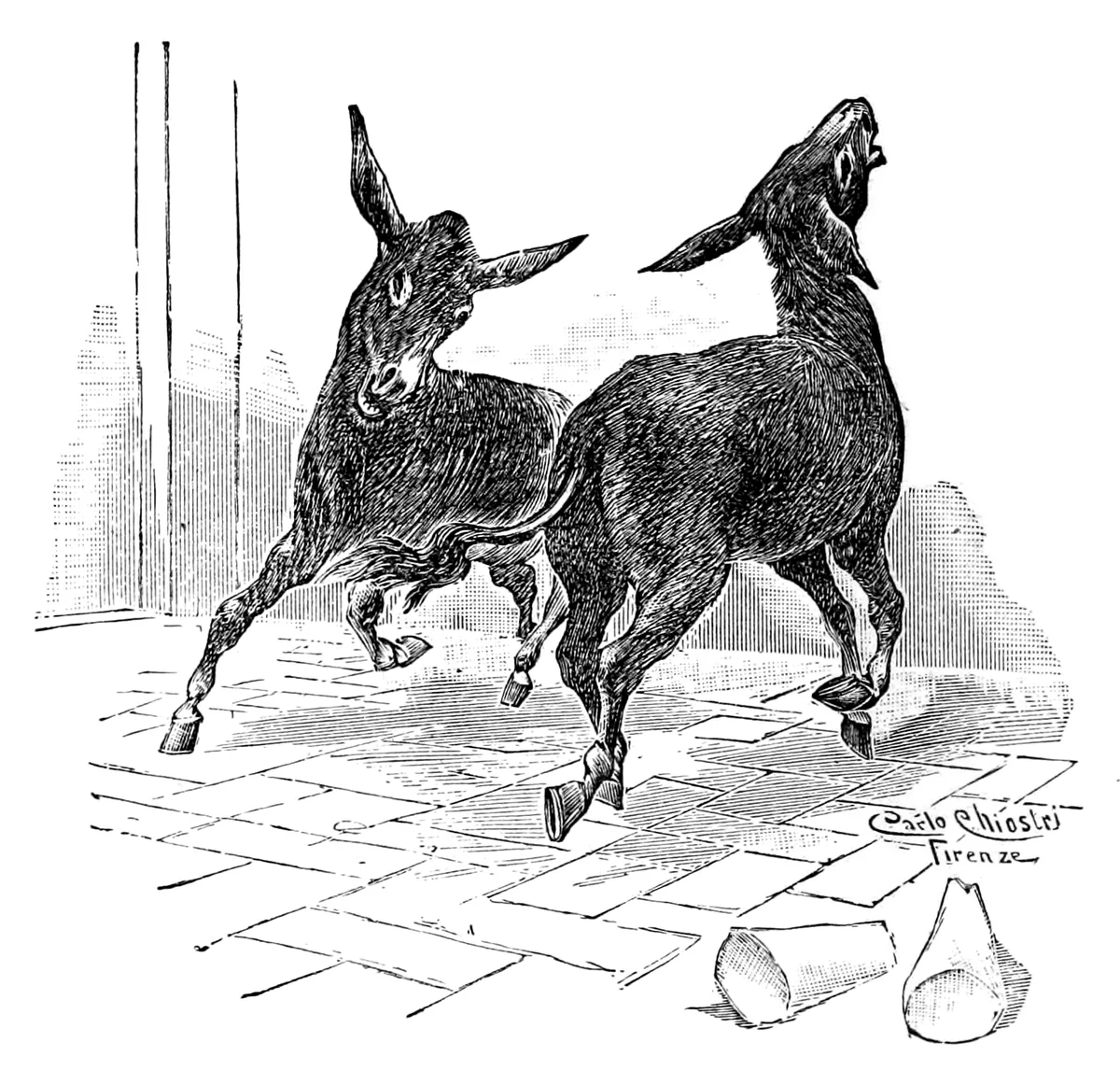
And as they were saying this, they both bent down on all fours and, walking on their hands and feet, began to go round and round and run about the room. And as they ran, their arms turned into legs, their faces grew longer and became muzzles, and their backs were covered with a light grey coat, flecked with black.
But do you know when the worst moment came for those two wretches? The worst and most humiliating moment was when they felt a tail sprouting out behind. Overcome then by shame and grief, they tried to cry and lament their fate.
If only they had never done it! Instead of moans and laments, out came donkey’s brays: and braying loudly, they both went together in chorus: Hee-haw, hee-haw, hee-haw.
Just then there was a knock at the door, and a voice outside said:
“Open up! It’s me, the Little Man, the driver of the wagon that brought you to this country. Open up at once, or woe betide you!”