Just as the fisherman was on the very point of throwing Pinocchio into the pan, a big dog came into the cave, drawn there by the sharp and tempting smell of frying.
“Get away!” the fisherman shouted at him threateningly, still holding the floured puppet in his hand.
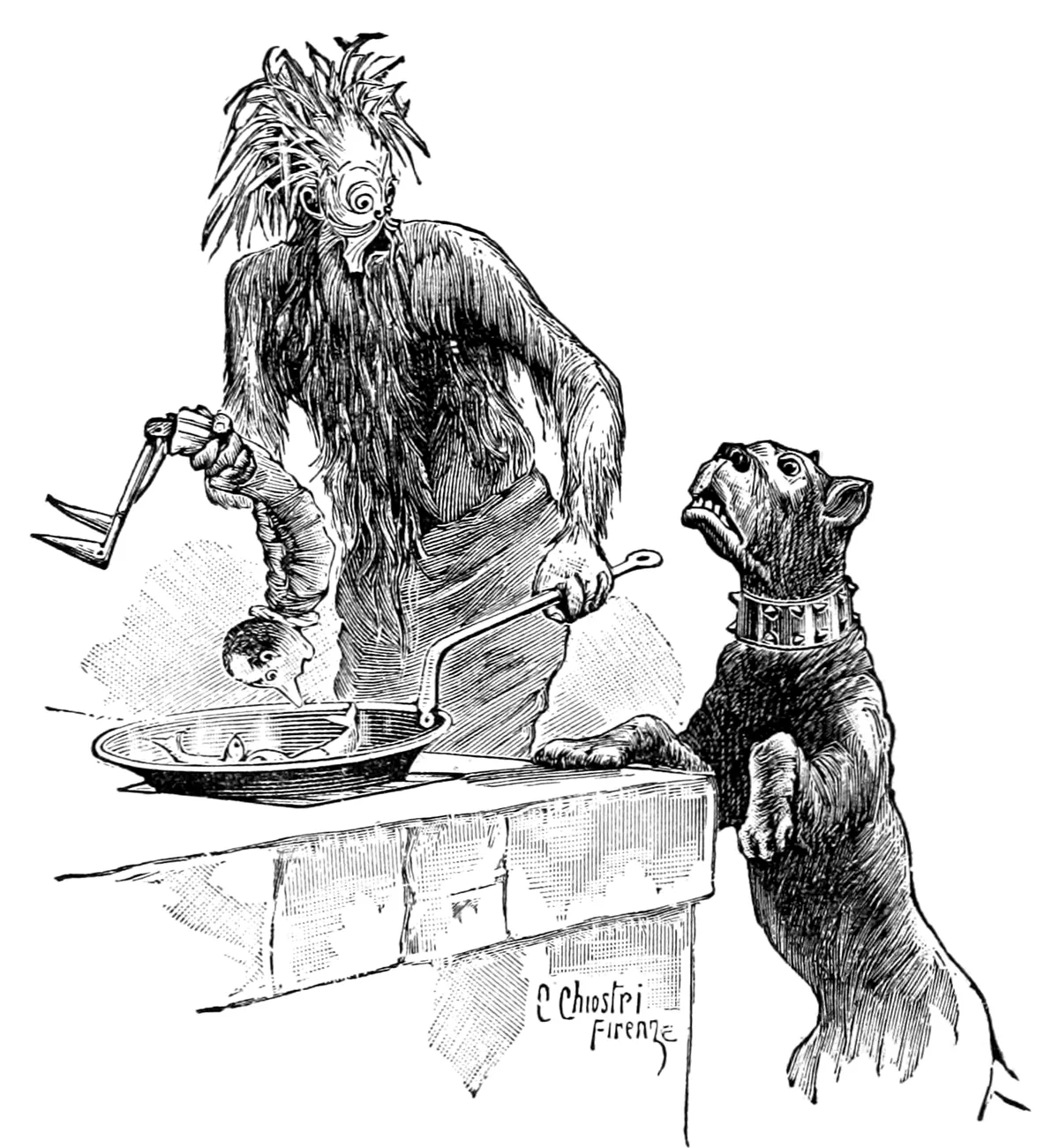
But the poor dog was as hungry as four dogs, and, whining and wagging his tail, he seemed to be saying:
“Give me a mouthful of fried fish and I’ll leave you in peace.”
“Get away, I tell you!” the fisherman repeated; and he stretched out his leg to give him a kick.
Then the dog, who, when he was really hungry, was not used to letting flies settle on his nose, turned on the fisherman, snarling and showing him his terrible fangs.
At that moment a tiny, feeble little voice was heard in the cave, saying:
“Save me, Alidoro! If you don’t save me, I’m fried!…”
The dog at once recognised Pinocchio’s voice, and noticed, to his very great amazement, that the little voice had come out of that floured bundle the fisherman was holding in his hand.
So what does he do? He makes a great leap from the ground, seizes that floured bundle in his mouth, and, holding it gently in his teeth, runs out of the cave and off like a flash of lightning!
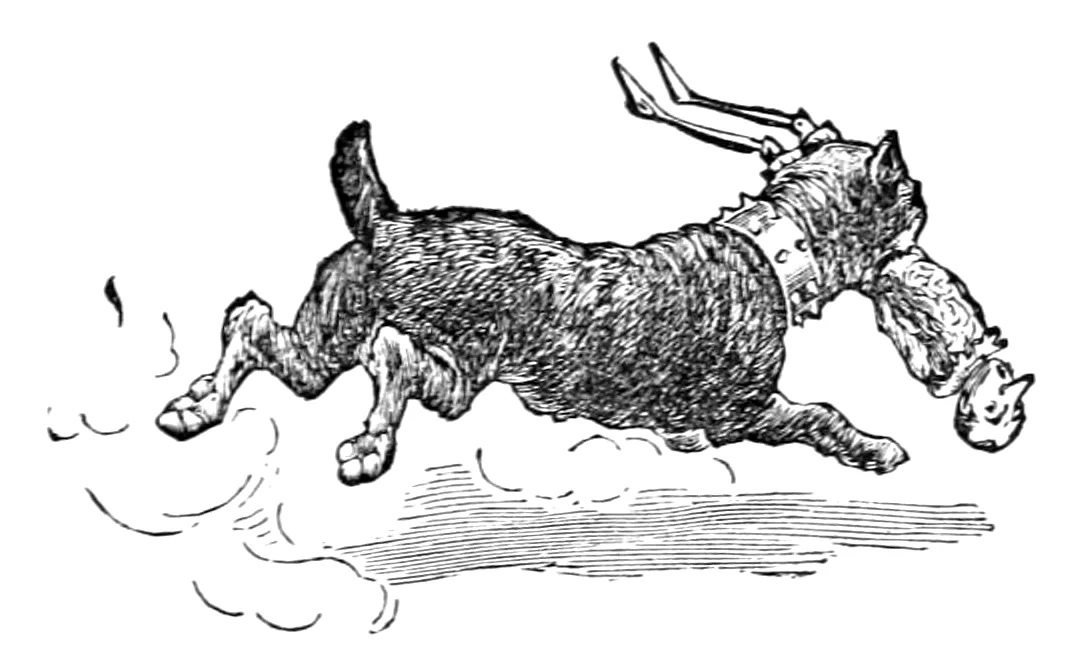
The fisherman, furious at having a fish snatched out of his hand that he would so gladly have eaten, tried to run after the dog; but after a few steps he was seized by a fit of coughing and had to turn back.
Meanwhile Alidoro, as soon as he had found the lane that led to the village, stopped and gently set his friend Pinocchio down on the ground.
“How much I owe you thanks!” said the puppet.
“There’s no need,” replied the dog. “You saved me, and one good turn deserves another. Everybody knows that in this world we must all help one another.”
“But how did you ever come to be in that cave?”
“I was still lying here on the beach, more dead than alive, when the wind brought me a smell of frying from far away. That smell tickled my appetite, and I followed it. If I had got there a minute later!…”
“Don’t say it!” howled Pinocchio, who was still trembling with fright. “Don’t say it! If you had got there a minute later, by now I would have been fried, eaten and digested. Brrr! It gives me the shivers just to think of it!…”
Alidoro, laughing, held out his right paw to the puppet, who shook it very, very hard as a sign of great friendship; and after that they parted.
The dog set off for home again; and Pinocchio, left alone, went to a hut not far away and asked a little old man who was sitting in the doorway warming himself in the sun:
“Tell me, good sir, do you know anything about a poor boy who was wounded in the head and whose name was Eugenio?”
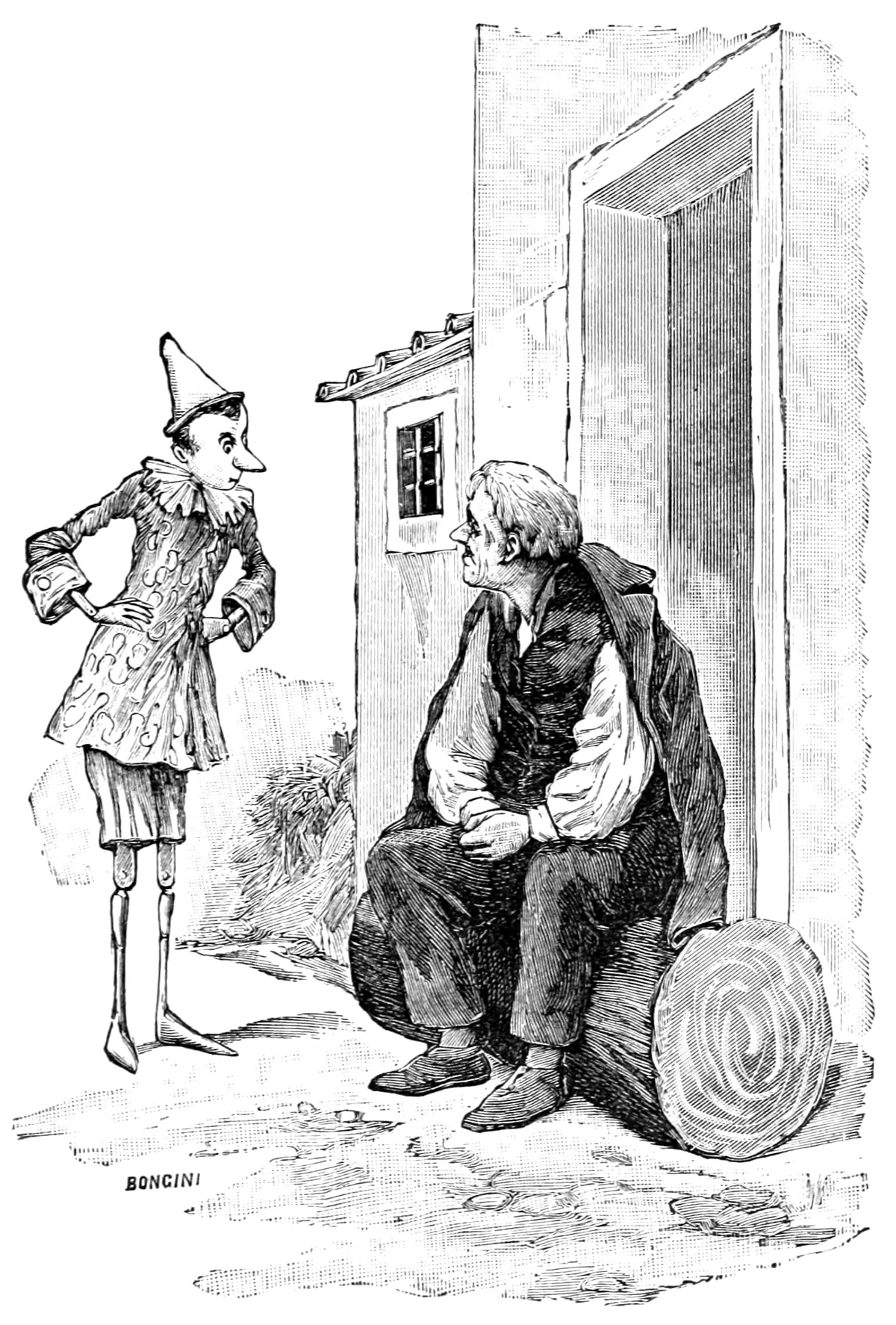
“The boy was brought by some fishermen to this hut, and now…”
“Now he must be dead!…” Pinocchio broke in, full of grief.
“No: now he’s alive, and he has already gone back home.”
“Really?… Really?…” cried the puppet, jumping for joy. “Then the wound wasn’t serious?…”
“But it might have turned out very serious, and even deadly,” answered the little old man, “because they threw a big book bound in cardboard at his head.”
“And who threw it at him?”
“One of his schoolmates: a certain Pinocchio…”
“And who is this Pinocchio?” asked the puppet, playing the innocent.
“They say he’s a bad boy, a vagabond, a real good-for-nothing.”
“Slander! It’s all slander!”
“Do you know this Pinocchio?”
“By sight!” answered the puppet.
“And what do you think of him?” the little old man asked him.
“He seems to me a very good boy, full of eagerness to study, obedient, devoted to his father and his family…”
While the puppet was reeling off all these lies with a straight face, he touched his nose and found that it had grown longer by more than a hand’s breadth. Then, very frightened, he began to shout:
“Don’t believe, good sir, all the good things I’ve told you about him; because I know Pinocchio very well, and I can assure you too that he really is a bad boy, disobedient and lazy, and that instead of going to school he goes off with his schoolmates to play the rascal!”
As soon as he had spoken these words, his nose shrank and went back to its natural size, as it was before.
“And why are you all white like that?” the little old man suddenly asked him.
“I’ll tell you… without noticing, I rubbed against a wall that had just been whitewashed,” answered the puppet, ashamed to tell that he had been floured like a fish so as to be fried in a pan.
“And what have you done with your jacket, your little trousers and your cap?”
“I met some thieves and they stripped me. Tell me, good old man, wouldn’t you by any chance have a few little clothes to give me, just so that I can go back home?”
“My boy, as for clothes, all I have is a little sack where I keep my lupin beans. If you want it, take it: there it is.”
Pinocchio did not need to be told twice: he at once took the lupin sack, which was empty, and after cutting a small hole in the bottom and two holes in the sides with the scissors, he slipped it on like a shirt. And, lightly dressed in this fashion, he set off towards the village. But along the way he did not feel at all easy; so much so that he took one step forward and one step back, and, talking to himself, he kept saying:
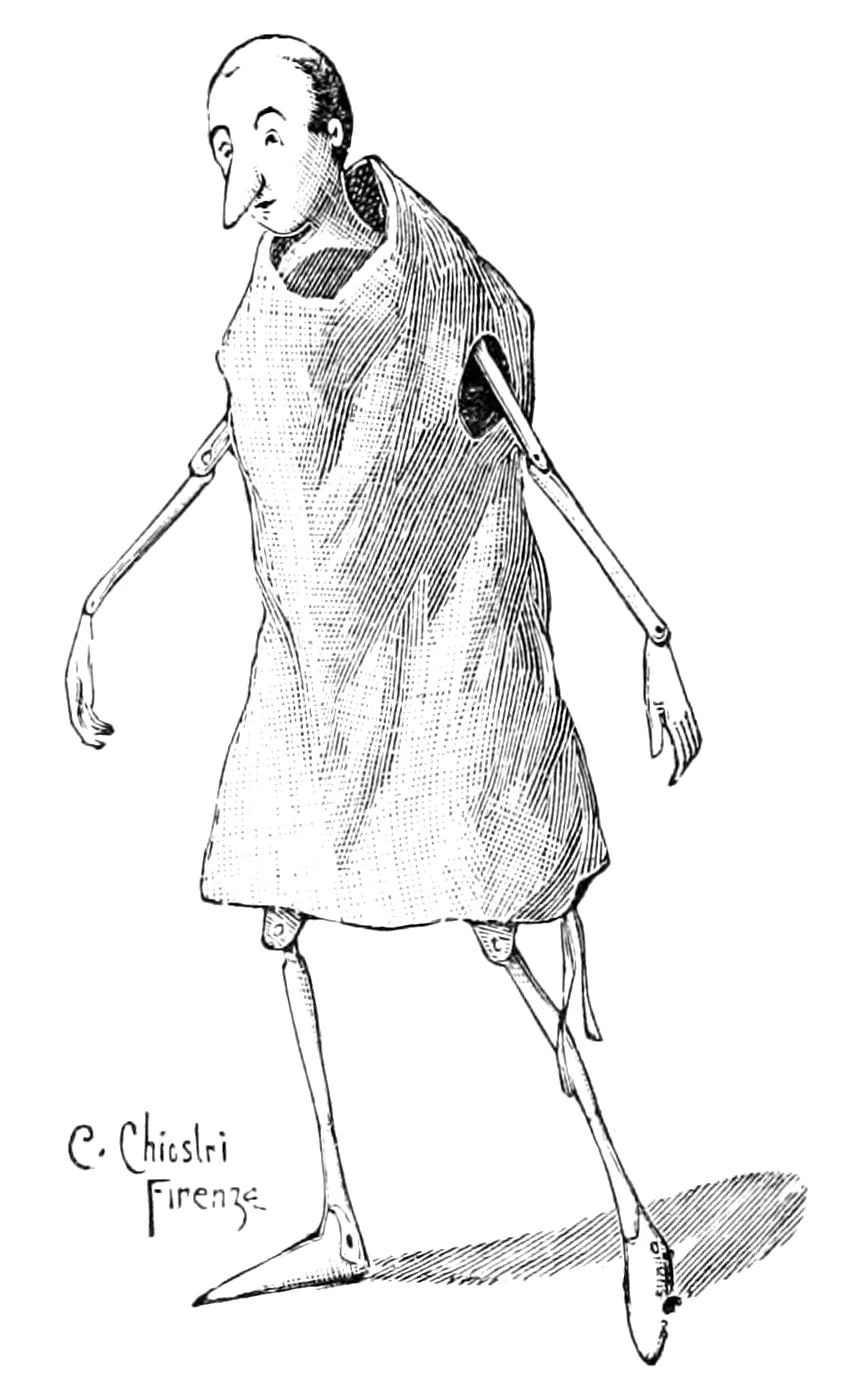
“How shall I face my good little Fairy? What will she say when she sees me?… Will she forgive me this second piece of mischief?… I bet she won’t forgive me!… Oh! She certainly won’t forgive me!… And it serves me right: because I’m a rascal who is always promising to mend his ways, and never keeps his word!…”
He reached the village when it was already pitch dark; and because the weather was foul and the rain was coming down in bucketfuls, he went straight to the Fairy’s house, firmly resolved to knock at the door and get them to open it.
But when he got there, he felt his courage fail him, and instead of knocking he ran off some twenty paces. Then he came back to the door a second time, and did nothing; then he went up to it a third time, and nothing; the fourth time, trembling, he took hold of the iron knocker and gave one tiny little knock.
He waited and waited, and at last, after half an hour, a window on the top floor opened (the house was four storeys high), and Pinocchio saw a big Snail look out, with a little lamp lit on her head, who said:
“Who is it at this hour?”
“Is the Fairy at home?” asked the puppet.
“The Fairy is asleep and doesn’t want to be woken: but who are you?”
“It’s me!”
“Me who?”
“Pinocchio.”
“Pinocchio who?”
“The puppet, the one who lives in the house with the Fairy.”
“Ah! I see,” said the Snail. “Wait for me there; I’ll come down now and open the door for you at once.”
“Hurry, for pity’s sake, because I’m dying of cold.”
“My boy, I am a Snail, and Snails are never in a hurry.”
Meanwhile an hour went by, then two, and the door did not open; so Pinocchio, who was shivering with cold, with fear and with the water that soaked him, plucked up his courage and knocked a second time, and knocked harder.
At that second knock a window on the floor below opened, and the same Snail looked out.
“Dear little Snail,” cried Pinocchio from the street, “I’ve been waiting for two hours! And two hours, on a horrid night like this, grow longer than two years. Hurry, for pity’s sake.”
“My boy,” answered that little creature from the window, all peace and calm, “my boy, I am a Snail, and Snails are never in a hurry.” And the window closed again.
Shortly afterwards midnight struck; then one o’clock, then two o’clock in the morning, and the door was still shut.
Then Pinocchio, losing patience, angrily seized the door knocker to give a knock that would make the whole building shake; but the knocker, which was made of iron, suddenly turned into a live eel, which slipped out of his hands and vanished into a little stream of water running down the middle of the street.
“Oh! Is that so?” cried Pinocchio, more and more blinded by rage. “If the knocker has vanished, I’ll go on knocking with kicks.”
And, stepping back a little, he let fly a tremendous kick at the door of the house. The blow was so hard that his foot went halfway into the wood; and when the puppet tried to pull it out again, it was all wasted effort, because the foot had stuck fast in there like a clinched nail.
Just imagine poor Pinocchio! He had to spend the whole rest of the night with one foot on the ground and the other one in the air.
In the morning, at daybreak, the door finally opened. That good little creature the Snail had taken only nine hours to come down from the fourth floor to the street door. One really has to say she must have worked up quite a sweat.
“What are you doing with that foot stuck in the door?” she asked the puppet, laughing.
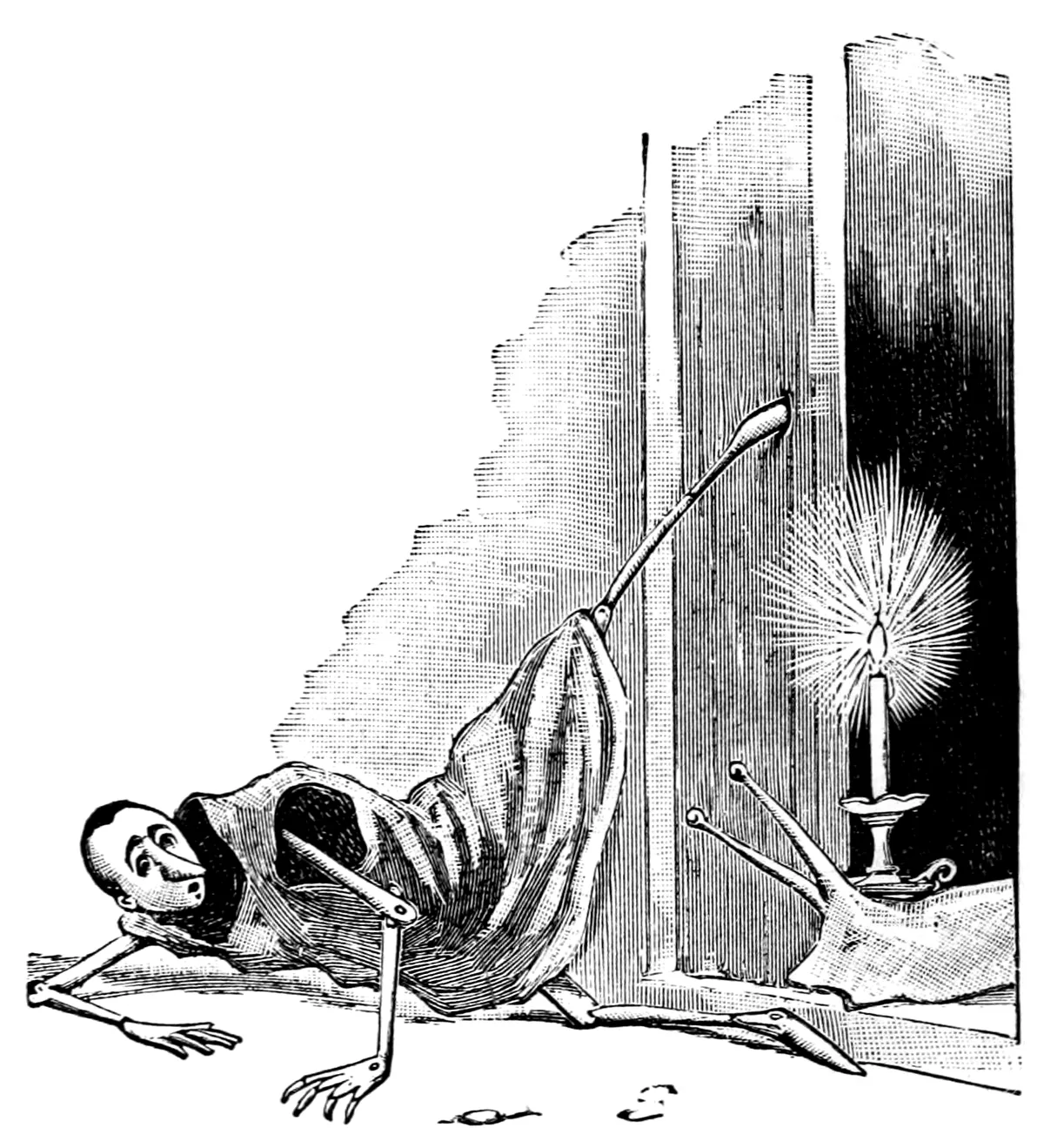
“It was an accident. Do see, dear little Snail, whether you can free me from this torture.”
“My boy, for that you need a carpenter, and I have never been a carpenter.”
“Ask the Fairy for me!…”
“The Fairy is asleep and doesn’t want to be woken.”
“But what do you expect me to do, nailed to this door all day long?”
“Amuse yourself counting the ants that go by in the street.”
“At least bring me something to eat, because I feel worn out.”
“At once!” said the Snail.
And indeed, three and a half hours later, Pinocchio saw her coming back with a silver tray on her head. On the tray there was a loaf of bread, a roast chicken and four ripe apricots.
“Here is the breakfast the Fairy sends you,” said the Snail.
At the sight of all that good food, the puppet felt completely comforted. But how great was his disappointment when, beginning to eat, he had to realise that the bread was made of plaster, the chicken of cardboard and the four apricots of alabaster, painted as if they were real.
He wanted to cry, he wanted to give himself up to despair, he wanted to throw away the tray and everything on it; but instead, whether from his great grief or from the great emptiness in his stomach, the fact is that he fell down in a faint.
When he came to, he found himself lying on a sofa, and the Fairy was beside him.
“This time, too, I forgive you,” the Fairy said to him, “but woe betide you if you play me another of your tricks!…”
Pinocchio promised and swore that he would study and would always behave well. And he kept his word for the whole rest of the year. In fact, at the end-of-year examinations before the holidays, he had the honour of being the best pupil in the school; and his conduct in general was judged so praiseworthy and satisfactory that the Fairy, very pleased, said to him:
“Tomorrow at last your wish will come true!”
“Meaning what?”
“Tomorrow you will stop being a wooden puppet, and you will become a proper boy.”
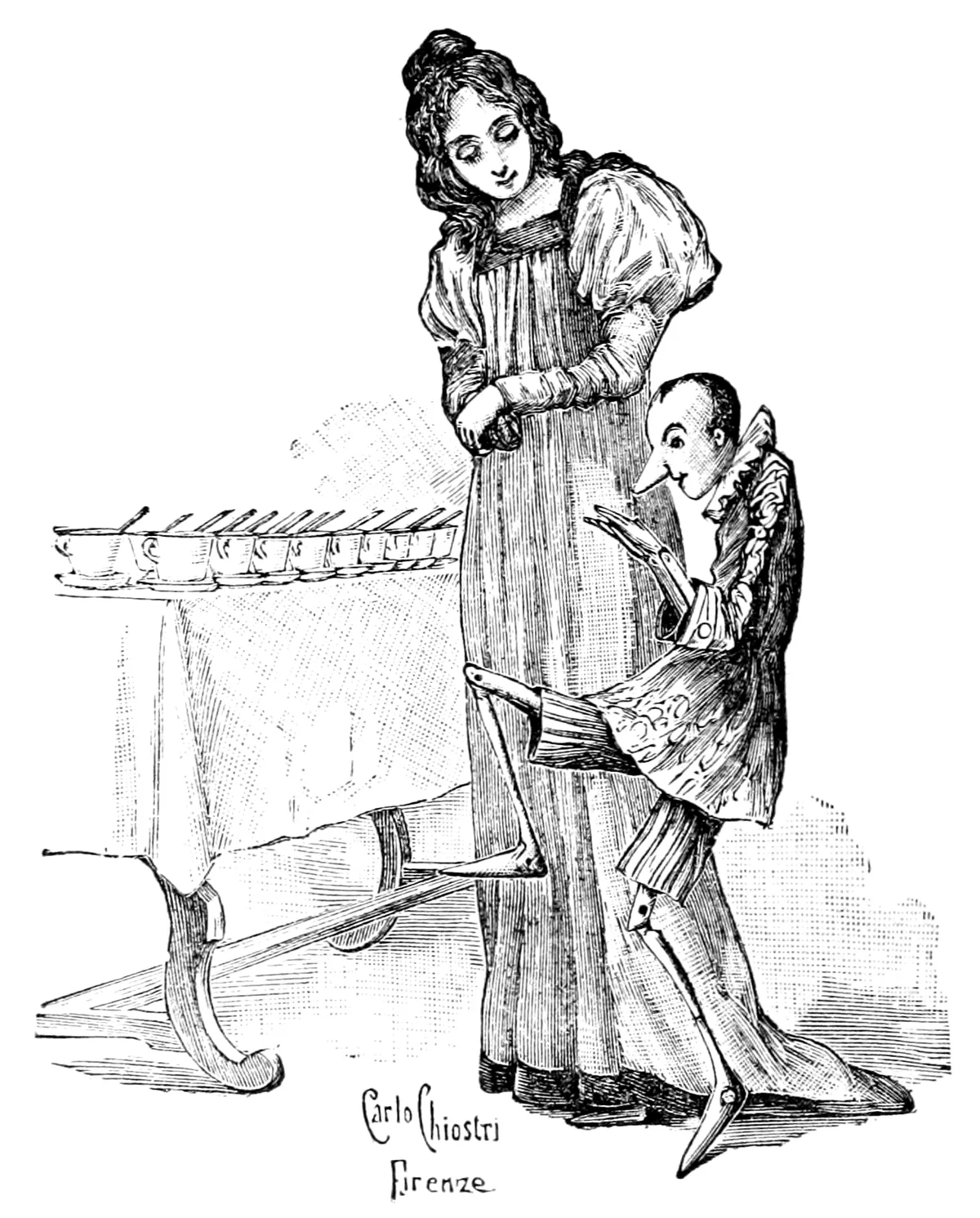
Anyone who did not see Pinocchio’s joy at this long-awaited news will never be able to imagine it. All his friends and schoolmates were to be invited the next day to a grand breakfast at the Fairy’s house, to celebrate the great event together; and the Fairy had had two hundred cups of coffee-and-milk prepared, and four hundred little rolls buttered inside and out. That day promised to turn out very lovely and very merry: but…
Unfortunately, in the life of puppets there is always a but, which spoils everything.