Pinocchio, as you can imagine, began to cry, to scream, to plead; but his tears and cries were no use, because there were no houses to be seen round about, and not a living soul passed along the road.
Meanwhile night fell.
What with the agony of the trap sawing at his shins, and what with the fear of finding himself alone in the dark in the middle of those fields, the puppet was beginning almost to faint, when all of a sudden he saw a glow-worm passing over his head, and he called to it and said:
“Oh, little glow-worm, would you be so kind as to free me from this torture?…”
“Poor child!” replied the glow-worm, stopping to look at him in pity. “How did you come to have your legs caught in the jaws of those sharp irons?”
“I came into the field to pick a couple of bunches of these muscat grapes, and…”
“But were the grapes yours?”
“No…”
“Then who taught you to take other people's things?…”
“I was hungry…”
“Hunger, my boy, is no good reason for helping yourself to things that aren't ours…”
“It's true, it's true!” cried Pinocchio, weeping. “But another time I won't do it again.”
At this point the conversation was interrupted by a very faint sound of approaching footsteps. It was the owner of the field, coming on tiptoe to see whether one of those weasels that ate his chickens at night had been caught in the trap.
And he was very much astonished when, taking his lantern out from under his greatcoat, he saw that instead of a weasel a boy had been caught.
“Ah, you little thief!” said the farmer angrily. “So it's you who's been carrying off my hens?”
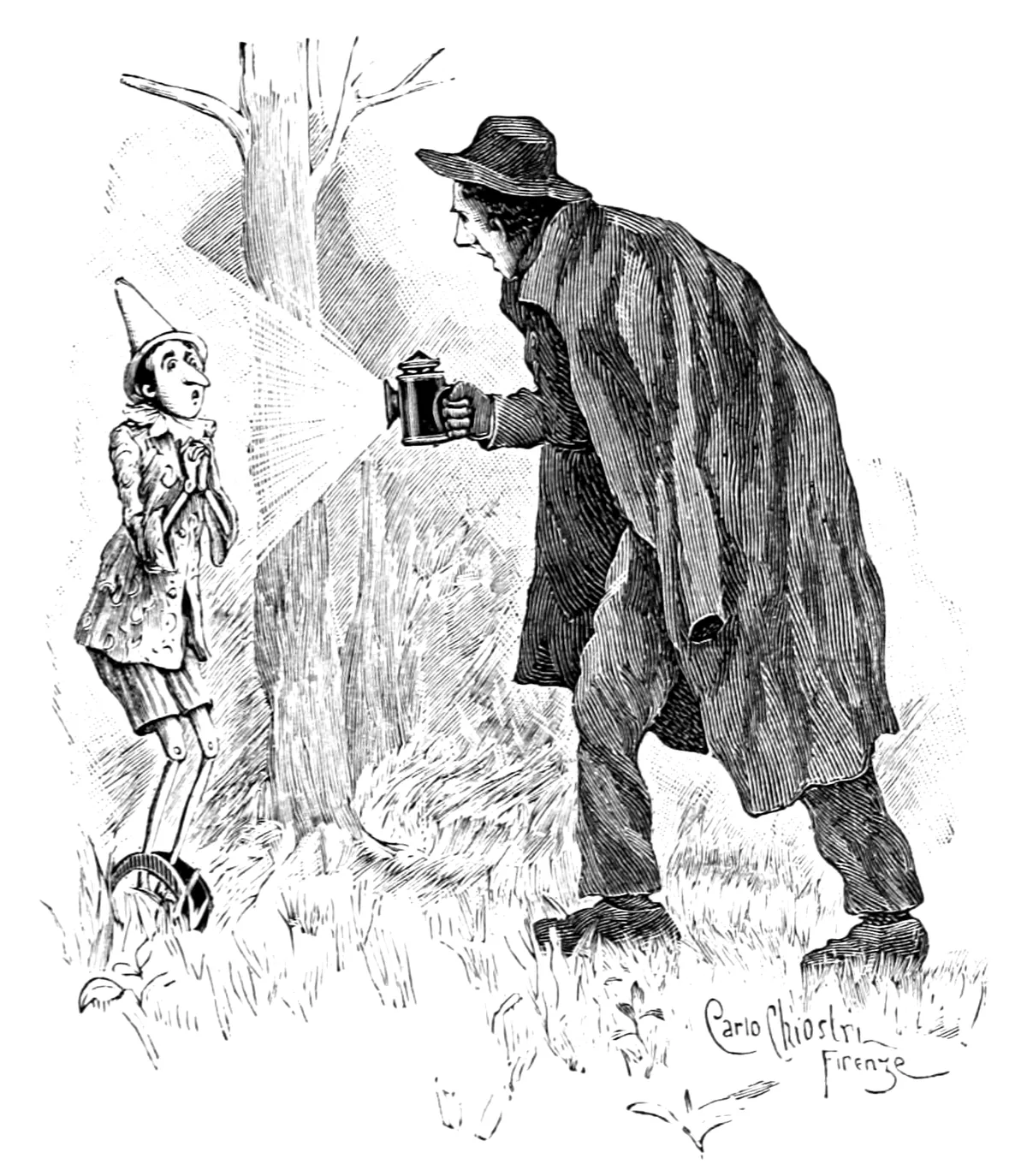
“Not me, not me!” cried Pinocchio, sobbing. “I only came into the field to take a couple of bunches of grapes!”
“Anyone who steals grapes is quite capable of stealing chickens too. Leave it to me: I'll teach you a lesson you'll remember for a good while.”
And opening the trap, he seized the puppet by the scruff of the neck and carried him bodily all the way home, as you might carry a little suckling lamb.
When he reached the farmyard in front of the house, he flung him down on the ground and, holding a foot on his neck, said to him:
“It's late now, and I want to go to bed. We'll settle our accounts tomorrow. Meanwhile, since the dog that kept watch for me at night died today, you shall take his place at once. You shall be my watchdog.”
No sooner said than done: he slipped a big collar all covered with brass spikes round his neck, and fastened it so tight that he couldn't pull his head out of it. A long iron chain was attached to the collar, and the chain was fixed to the wall.
“If it starts to rain tonight,” said the farmer, “you can go and lie down in that wooden kennel, where there's still the straw that was my poor dog's bed for four years. And if by bad luck the thieves should come, remember to keep your ears pricked and to bark.”
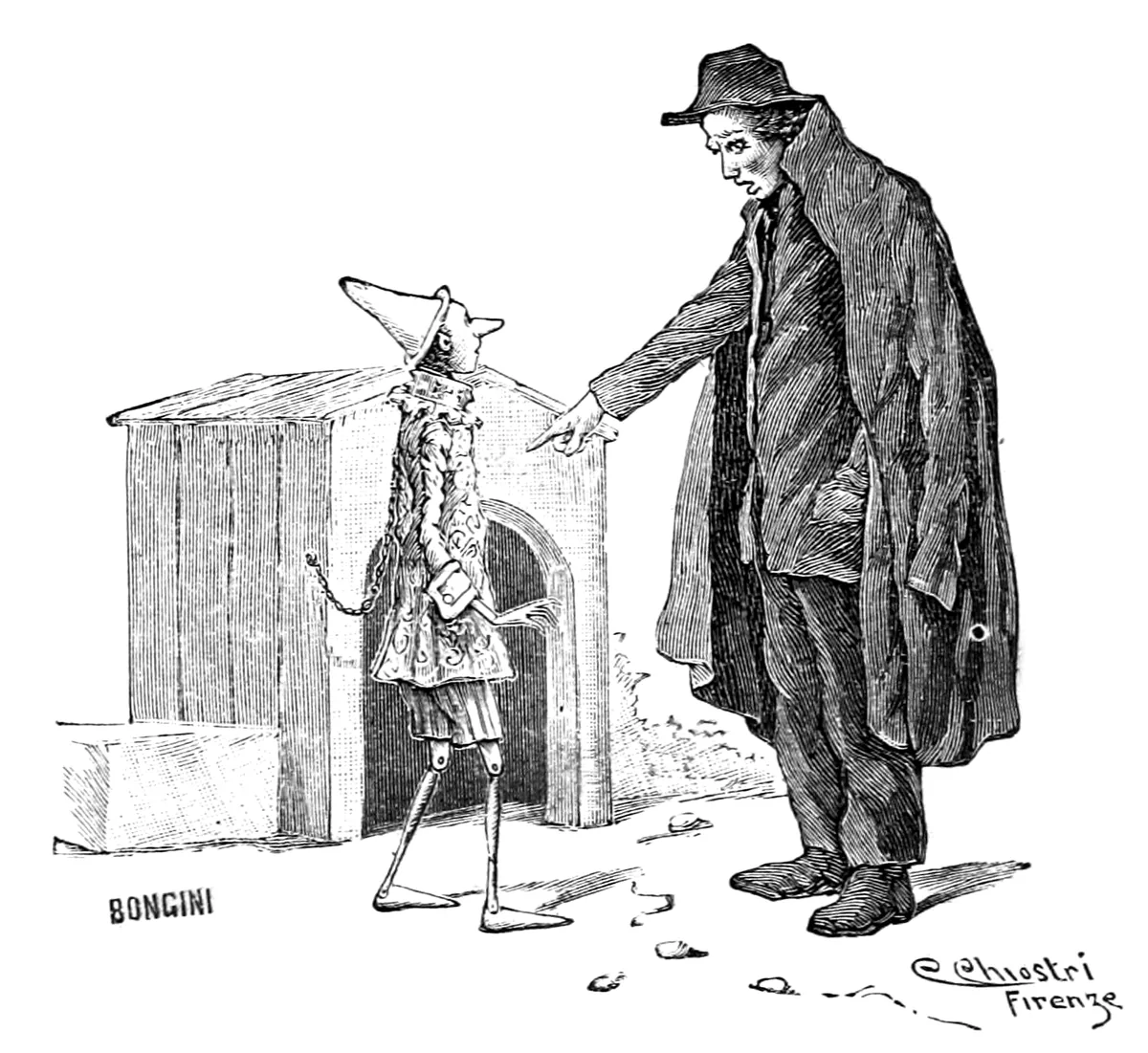
After this last warning the farmer went into the house and shut the door with a great big bolt; and poor Pinocchio was left crouching in the farmyard, more dead than alive with cold, hunger and fear. And every now and then, angrily thrusting his hands inside the collar that was squeezing his throat, he said, weeping:
“It serves me right!… Yes, worse luck, it serves me right! I wanted to be a lazybones and a vagabond… I wanted to listen to bad companions, and that's why bad luck is always after me. If I'd been a good little boy, like so many others; if I'd wanted to study and work; if I'd stayed at home with my poor father, I wouldn't be here now, out in the middle of the fields, being a watchdog for a farmer's house. Oh, if only I could be born all over again!… But it's too late now, and I must be patient!”
Having let off this little bit of steam, which came straight from his heart, he went into the kennel and fell asleep.