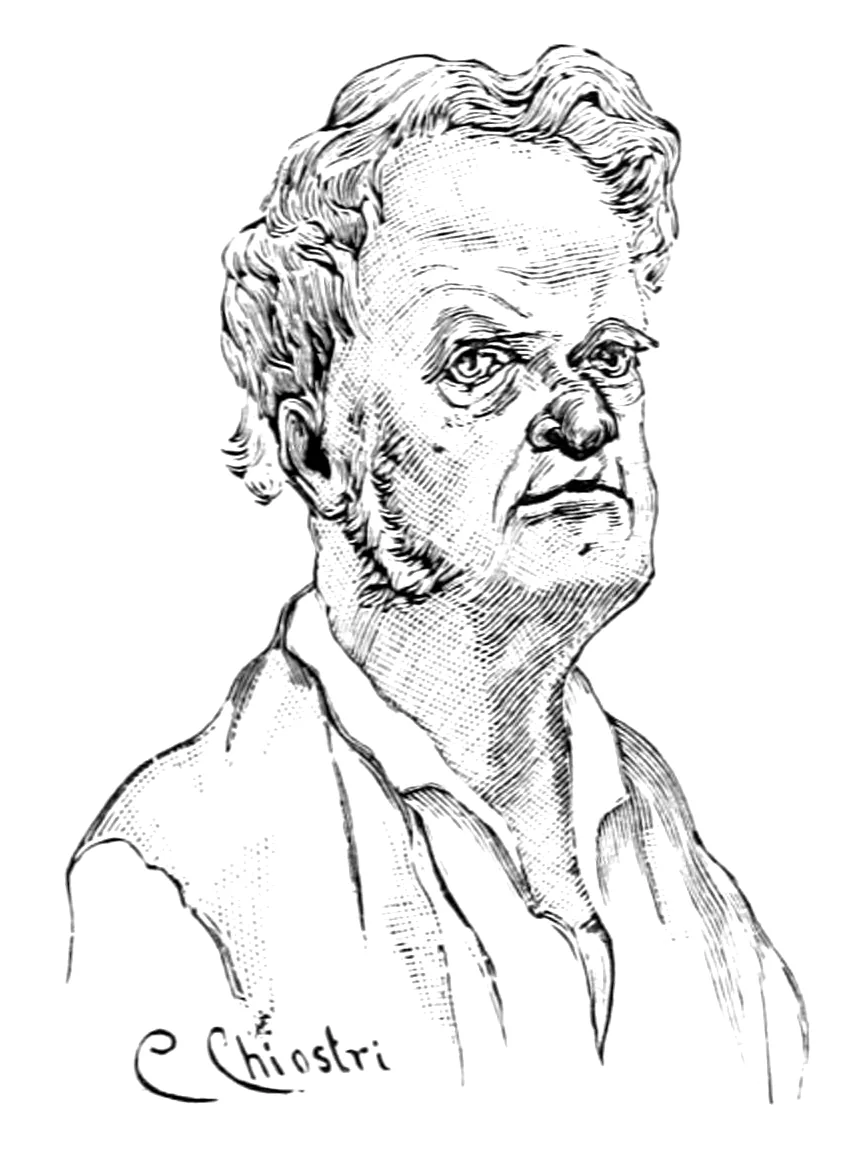
“Once upon a time there was....”
“A king!” my little readers will say at once.
“No, children, you are wrong. Once upon a time there was a piece of wood.”
It was not a fine, costly piece of wood, but just an ordinary log from the woodpile, the kind you put in stoves and fireplaces in winter to light the fire and warm the rooms.
I don't know how it happened, but the fact is that one fine day this piece of wood turned up in the workshop of an old carpenter whose name was Master Antonio, except that everyone called him Master Cherry, on account of the tip of his nose, which was always shiny and purple, like a ripe cherry.
As soon as Master Cherry set eyes on that piece of wood, he cheered up no end; and rubbing his hands together with delight, he muttered under his breath:
“This wood has come just at the right time; I'll use it to make a leg for a little table.”
No sooner said than done: he took up his sharpened axe to begin stripping off the bark and roughing it into shape; but just as he was about to let fly the first blow, he stopped with his arm raised in the air, because he heard a tiny, tiny little voice that said, pleading:
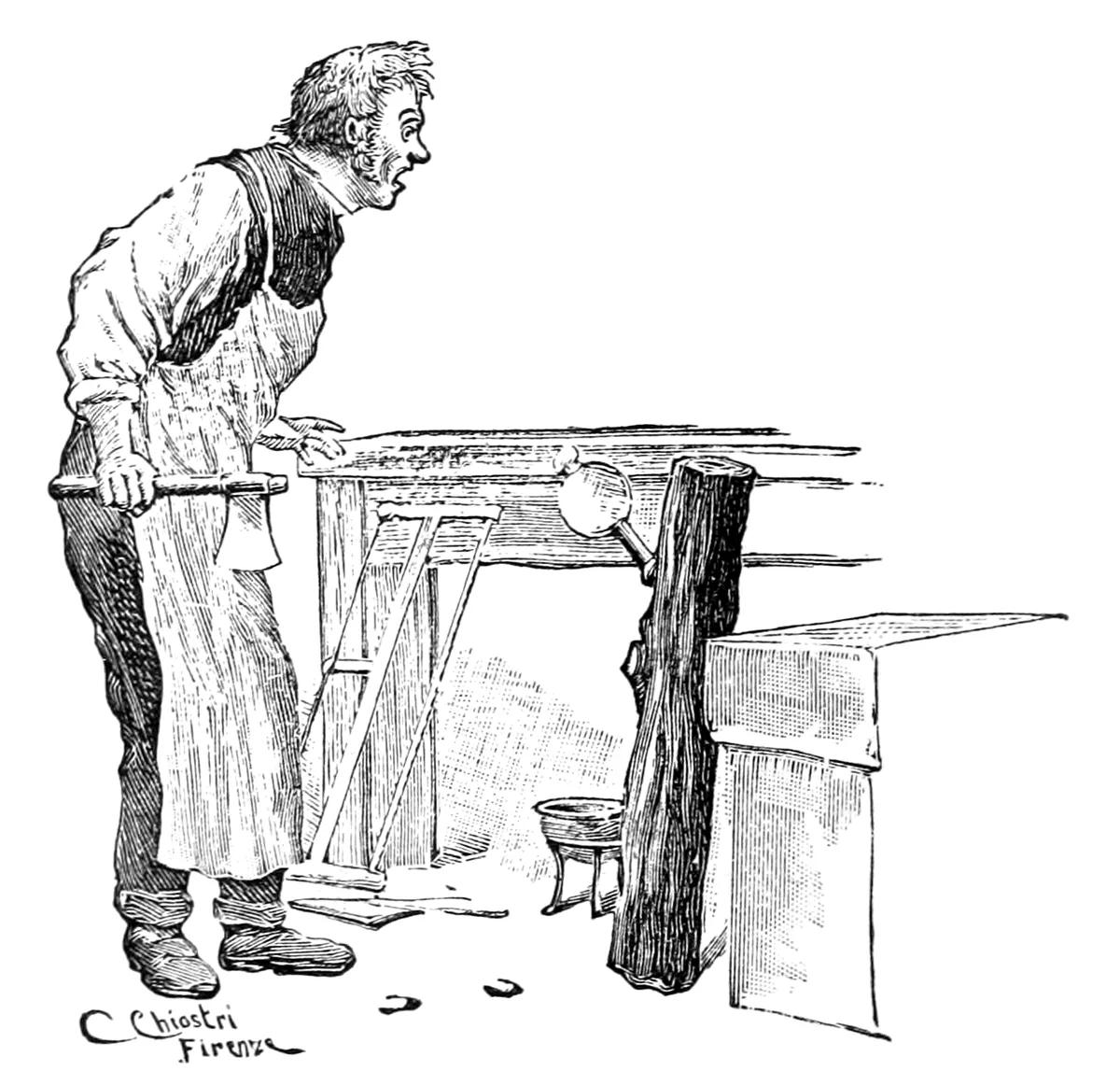
“Don't hit me so hard!”
Just imagine how good old Master Cherry felt!
He rolled his bewildered eyes around the room to see where on earth that little voice could have come from, and he saw nobody! He looked under the workbench, and nobody; he looked inside a cupboard that was always kept shut, and nobody; he looked in the basket of shavings and sawdust, and nobody; he opened the workshop door to take a look out in the street as well, and nobody. Well then?...
“I see,” he said, laughing and scratching his wig, “I must have imagined that little voice. Let's get back to work.”
And taking up the axe again, he brought it down with a tremendous blow on the piece of wood.
“Ow! You've hurt me!” cried the same little voice, complaining.
This time Master Cherry was struck dumb, his eyes popping out of his head with fright, his mouth wide open and his tongue hanging down to his chin, like the stone face on a fountain.
As soon as he could speak again, he began, trembling and stammering with terror:
“But where can this little voice that said ow have come from?... There isn't a living soul in here. Could it be that this piece of wood has learnt to cry and complain like a child? I can't believe it. Here's the wood, right here; it's a piece of firewood like any other, and if you throw it on the fire, it'll boil a pot of beans.... Well then? Could someone be hiding inside it? If someone is hiding in there, so much the worse for him. I'll settle him now!”
And so saying, he grabbed that poor piece of wood with both hands and began to bang it mercilessly against the walls of the room.
Then he stopped to listen, to hear whether any little voice was complaining. He waited two minutes, and nothing; five minutes, and nothing; ten minutes, and nothing!
“I see,” he said, trying hard to laugh and ruffling up his wig, “I must have imagined that little voice that said ow! Let's get back to work.”
And because he had been seized by a great fright, he tried humming a little tune to pluck up some courage.
Meanwhile, putting the axe aside, he took up his plane to plane the piece of wood smooth and polish it; but while he was planing it up and down, he heard the same little voice, which said to him, laughing:
“Stop it! You're tickling me all over!”
This time poor Master Cherry fell down as if struck by lightning. When he opened his eyes again, he found himself sitting on the floor.
His face seemed quite changed, and even the tip of his nose, instead of purple as it nearly always was, had turned blue with the great fright.